
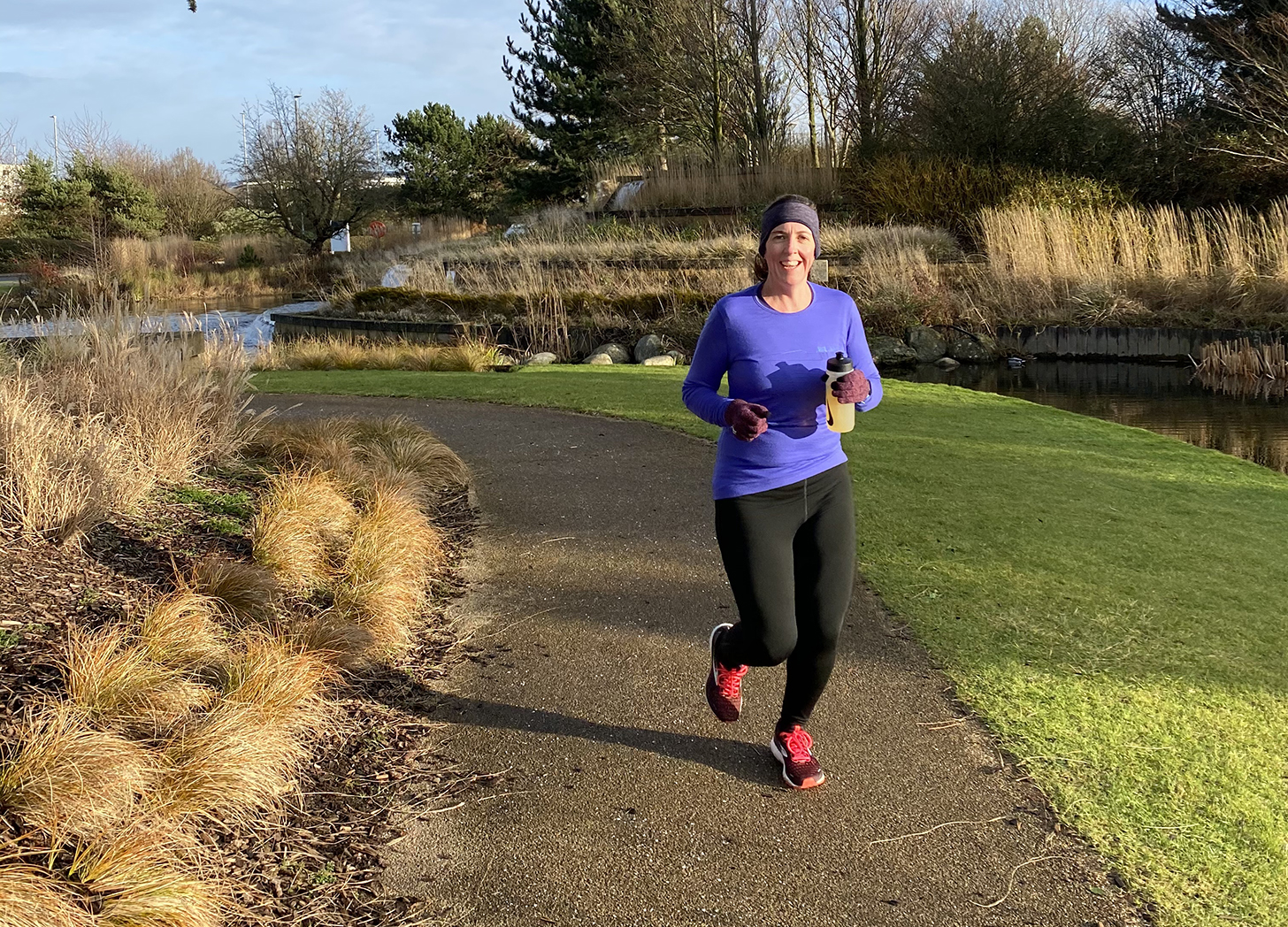
I spent 15 years trying to work out what makes a running habit stick. Each time I stopped being a little more frustrating than the time before. I was doing so many things wrong. In fact, I was doing very little right.
Why my running habit didn’t stick
The most overquoted concept in Atomic Habits by James Clear is ‘You do not rise to the level of your goals. You fall to the level of your systems.’ Whilst this may be true, I think there are more useful ideas in the book. A training plan for an event would be a system. I had plenty of good training plans. I signed up for lots of events. Something to aim at. Nothing worked.
If I’d read Atomic Habits at that time, I would probably have homed in on the systems idea. But that wouldn’t have helped me. I would’ve missed the part about identity, and I suspect I would also have failed to understand the four laws of behaviour change: Make it obvious, attractive, easy and satisfying. I would’ve got some of the four, but not all of them.
And I’d have totally missed the idea of tiny. Making something so small it’s obvious, attractive, easy and satisfying all at the same time. I always went too big. I started with my first ever run event, the Great North Run, 13.1 miles of road without an effective training plan. Then I ran a marathon. That was never going to be easy, but by missing ‘tiny’ I started on my plan with 12 weeks to go. The lowest mileage in my plan was 3 miles. I couldn’t run 3 miles.
With such an approach, it’s not really a surprise that I never managed to establish a running habit. I couldn’t make anything stick.
My solution
I started streaking. Run a minimum of a mile every day, no day off. Again, ignoring the four laws of behaviour change, I opted for 5K a day. I got away with it; the habit had stuck before I got injured so it became a management project more than anything.
What if you ran a mile on your non-training days, to keep the consistency going. Or, even better, go for a walk at the time you would normally run. So, create the consistency, the daily habit, without the stress and intensity of running every day.
I had to start asking myself when I would run each day. Up until that point, I’d asked myself if I would run. Inherent in that question is the very real possibility that I wouldn’t run. I was asking myself if I felt like running, an emotional question that invariably ended up with no run.
Make your running habit stick
The challenge comes in when life starts to get in the way. A few things I do to manage this:
Run first
Run first thing in the morning before the day gets in the way and I get too tired. This might mean going to bed 15-30 minutes earlier so you can get up a bit earlier, but it’s worth it.
Ask the right question
My ‘When’, not ‘Will’ question is key to how you think about running. Keeping it matter of fact, removing any emotion, any possibility of argument, the opportunity to bail out, that’s the difference between doing and not.
Plan ahead
The night before, I plan how far I’ll run, what route I’ll take and I run it in my head. It helps my brain understand what’s going to happen when I get up in the morning.
Find your community
I joined a run streak community with other people doing what I wanted to do. The support and being part of something helped me. I really didn’t think this would be important. At that point I’d never been in a Facebook group, it wasn’t my thing. I don’t think I would’ve made my daily run stick without it.
Don’t compare
I stopped comparing myself to other people. Stopped worrying about how fast or how far I was going. I just ran. The Facebook group was ideal for this because no-one shared their time and few people shared their distance other than referencing their mile.
Time over distance
I read the Born Again Runner by Pete Magill and started thinking in time rather than kilometres or miles. I’m going for a 30-minute run was much more manageable in my head than a 3-mile run. If you have a distance goal, the time obviously needs to be long enough to cover that distance, but thinking in minutes is a good place to start. If you decide to do the official mile, set yourself a target of 15-20 minutes of running and calculate an out-and-back route of 800m each way.
Plan for disruption
Going on holiday or staying with friends, I’d research my running routes before I went, and I’d plan when I would run each day. Usually there’s a different timetable on holiday, often dictated by breakfast time in the hotel and/or when the day is hottest.
Spot the real goal
My streak wasn’t my real goal. Becoming a runner was. A runner by my own definition. Not someone else’s idea. Mine. It turns out this identity question was the key to my success. By thinking and speaking about myself as a runner, I started to do things that reinforced this identity. I used to think it’s my streak that keeps me on track, but really, it’s my identity. Everyone knows me as a runner. You mention running to me only if you are happy to talk about running for a while. This is who I am. I am a runner.
What would need to change for you to think of yourself as a runner?
