Most people who want to get into running aren’t stopped by their fitness. They’re stopped by fears, and almost all of them disappear when you understand them.
I should know. I was a stop-start runner for fifteen years. I’d get going, talk myself out of it, and start again months later. What changed was how I thought about it. These days I run every single day, I’ve finished the New York and London marathons, and I’m a Scottish Athletics qualified coach. Not because I’m built for it. Because I worked out what was getting in my way.
So, let’s deal with the most common fears that stop people from getting into running. In my experience there are four: speed, not knowing how, boredom and time.
I’m too slow
This is the big one, and it’s built on a misunderstanding. Unless you’re an elite athlete, fast and slow aren’t real measurements. They’re comparisons, usually to someone you’ve already decided is better than you.
Look at the actual numbers. The average 5K time in the UK is around 28 minutes for men and 33 for women. A complete beginner is often 35 to 45 minutes. None of that is slow; it’s normal. And an average works in both directions: for every woman flying round in 20 minutes, there’s another taking 50 minutes to over an hour. The fast runner you’re picturing is being balanced out by someone more like you.
Everyone is slow compared to someone. The word stops being useful.
Where speed really trips people up is the fear of joining a group and getting left behind. This is another assumption that doesn’t hold up. Most clubs run a beginners’ group with a no-one-left-behind policy; they loop back so you never notice who’s at the front. Parkrun has tail walkers who stay with the final runners, and that’s grown into Parkwalk, so you can go along and walk rather than run. The London Marathon celebrates every finisher; after eight hours the finish line itself moves from The Mall to St James’s Park so everyone still crosses a line and gets a medal. And there’s a method called Jeffing, after the coach Jeff Galloway, where you break a run into walk-run intervals; a friend of mine took thirty minutes off her marathon doing exactly that.
You will not be the slowest person who ever started. Nobody is watching the clock except you.
I don’t know what I’m doing
You need far less knowledge than you think. Getting out and putting one foot in front of the other is all it takes to start. The training plans, the paces, the distances; that’s all noise, and it comes later.
A few things will help, though.
If you’re gasping for breath, you’re likely going too fast. The test is simple: you should be able to speak in full sentences as you run. If you can’t, slow right down, even to a walk, and start again when you’ve recovered.
If you feel self-conscious, run somewhere quiet or at a quiet time of day while you find your feet. But honestly, no one is looking at you; every other runner is far too busy thinking about their own run. You start to believe this once you’ve been out a few times.
And injury worries you less once you know where injury comes from. Most beginner problems come down to two things: the wrong shoes and pushing too hard. A friend wanted to knock time off her 5K, so she was going out every couple of days trying to beat her last time. That’s exactly how you get hurt. I gave her a plan and taught her to run slower. A month later she came back faster. Running slow is genuinely hard and it takes practice, but it’s the thing that keeps you running for years rather than weeks.
I’ll get bored
You might get bored, but if you do there are things you can do. Change your route. You’ll be surprised at the difference if you simply run the same route in the opposite direction. Run somewhere with a bit of nature, or somewhere new. Take your music, a podcast or an audiobook, or leave the headphones at home and be alone with your thoughts. Run with other people; a club or a friend turns a chore into a catch-up.
The most effective way I know to overcome boredom is to use Fartlek, a Swedish word meaning “speed play”, where you pick a lamppost up ahead and run a little quicker until you reach it.
A goal can pull you out the door on the days you can’t be bothered. So give yourself something to aim at: a first parkrun, a 5K, a distance you’ve never run before.
I don’t have time
This is where I put my habits-coach hat on, because time isn’t usually the real problem; the decision is.
For years I’d ask myself, “Will I run today?” That’s an open negotiation, and I’d answer it based on how I felt, which is to say I’d usually talk myself out of it. The day I started asking “When will I run today?” the decision was already made. I was running; I just needed to find the slot.
So, make the decision once, in advance. Look at your week and pick three days you can realistically run. Choose a time for each one; I run in the morning because the day hasn’t had a chance to fill up with excuses yet. Write it down. You’ve now decided ahead of the moment your motivation wobbles, which is the only moment that matters.
Then celebrate every run, no matter how it went. Raise your arms at the end as if you’ve crossed a finish line; you have. The reward has to be immediate to build the habit, far more than the distant promise of a medal. Even on a run that felt awful, find one positive and commit to the next one. We all have off days, caused by poor sleep, stress, what we ate, where we are in the month. You won’t always know why. The trick is to find the positive and lace up again.
How to get into running
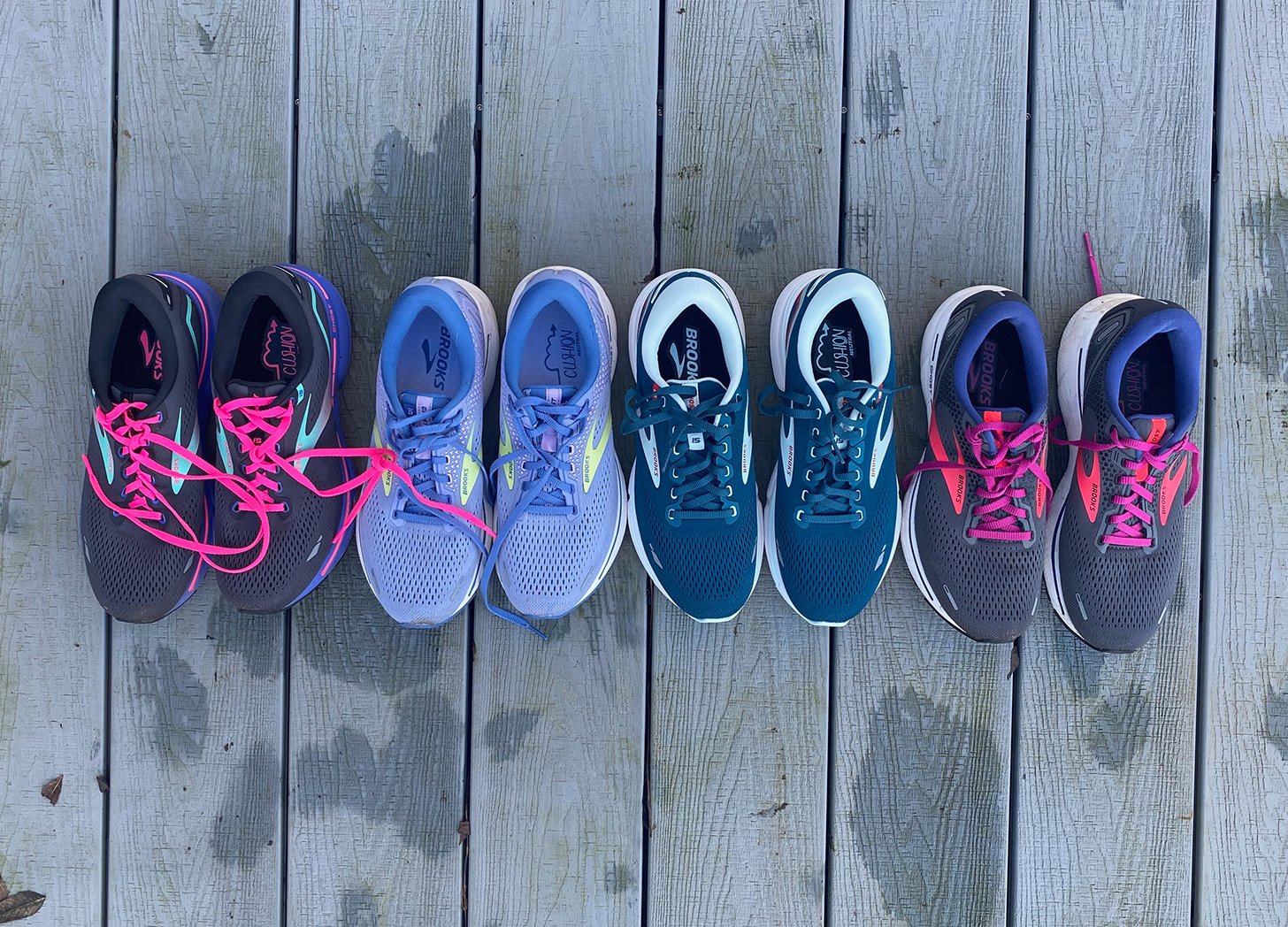
Keep your kit simple. Spend on shoes, because the wrong ones are where injuries start; go to a specialist running shop where they’ll fit you properly, rather than a single-brand store. If you need one, a supportive running bra matters as much as the shoes. Beyond that it’s technical layers to manage heat and sweat, and your phone is good enough to get going rather than investing in a watch.
Start with time, not distance. Run a little, walk a little, and build slowly. The NHS Couch to 5K is a good free plan but it is tough. Take it slower than the nine weeks if you need to. Repeat each of the first three or four weeks. Run-walk your way up, and the distance takes care of itself.
And run somewhere you know to begin with. Tell someone where you’re going and roughly when you’ll be back, stick to a familiar route, and be visible after dark. None of it takes long, and it lets you relax and enjoy the run.
Just start
That’s the whole secret, and it’s a bit of an anticlimax: the people who run aren’t faster, braver or less busy than you. They just started, then they kept the decision simple.
So, pick your three days. Choose your times. Then run.
Want a hand to get going? I’ve put together a free beginner’s plan with a warm-up and cool-down, and a simple run-walk progression. Sign up here to download your copy.
