
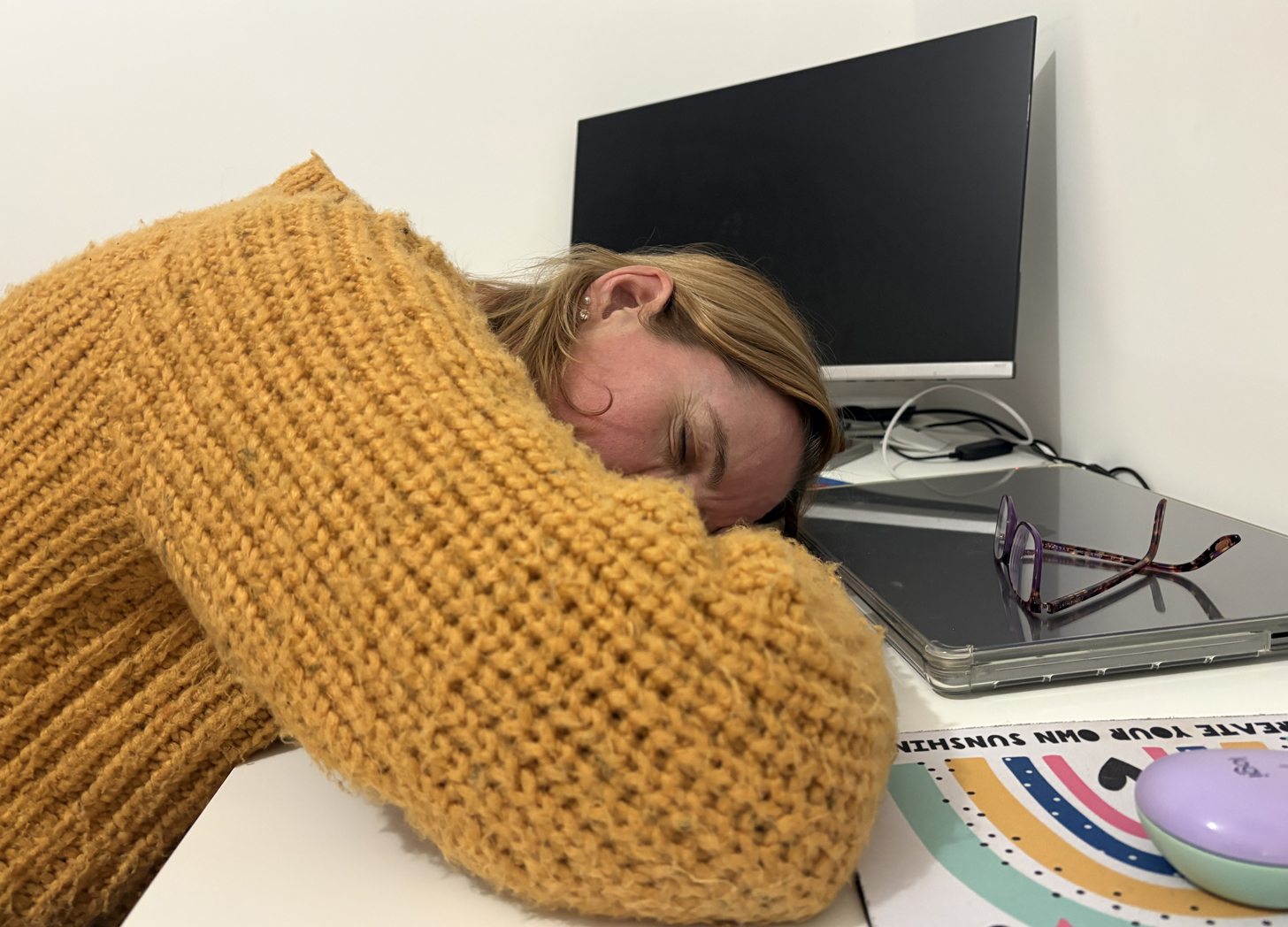
Systems work. Until they don’t.
I love a fresh start. A blank page in a new notebook. Mondays. The 1st of the month. I feel optimistic. Motivated. This time whatever grand plan I have is going to work.
My fresh start is usually inspired by some productivity method. Something I’ve come across that sounds good. Usually I’ve given up by Thursday (on a good week).
Giving up leads to finding a reason. Someone or something to blame. And there’s only ever one place I look. At myself. I’m not disciplined enough. My motivation wasn’t high enough. I lack willpower. I’m too tired.
Next week I try a little harder. This usually means I’ll quit by Wednesday. More effort leads to feeling worn out quicker.
I get more exhausted. Nothing sticks. My frustration increases. I feel useless.
Week after week. Month after month. And, yes, year after year.
How I wore myself out
I desperately wanted a side hustle. I blame Chris Guillebeau’s Side Hustle School podcast.
Why? Because I wanted something to change. I wanted additional income streams to create choices. I was becoming jaded in my career and felt there had to be something more. So, I forced myself to work on my business in the evening. I say ‘work’. I would sit down. Open my laptop. Stare at the screen.
I dreamed about giving up my job to work on my side hustle full time. Because that would solve everything. Resigning would automatically spark my motivation, and I’d be on my way.
All I needed was more freedom. More control. The space and opportunity to create days that worked for me.
Then I became self-employed. And I felt more exhausted than ever. So many decisions (most of them unnecessary). No structure, no deadlines and no accountability. It was overwhelming.
Why nothing sticks
I spent years thinking I was the problem.
I wasn’t the problem. My systems were.
Nothing sticks when you’re exhausted because consistency needs energy. When you’re drained, you can’t be bothered. You lack the energy to do the thing you wanted to do. That’s when you go into the decision loop. Will I or won’t I? Now or later? Tomorrow? Decision fatigue compounds. It drains your energy further.
The systems you read (or hear) about assume you have energy. They’re built for the people who write them. They don’t tell you how they came across the perfect system for them, the messy part where they kept getting it wrong. Why not? Because people want solutions. They want someone else to do the hard work. But that doesn’t work.
Why not? Because the systems assume consistent capacity. Morning routines. Evening work blocks. Daily habits. They all require energy you don’t have.
Failure (or perceived failure) makes you more tired. Each fresh start that doesn’t work just wastes time. It drains your belief that anything will work. So, you try harder, which only exhausts you faster.
This is why nothing sticks. Not because of some character flaw. Because the system doesn’t account for exhaustion.
It’s not wrong. But it’s not right
I got so much advice. Re-read all my favourite self-dev books. Found some new ones. Followed people online. Sought ideas from people I met at networking events. It was overwhelming. I was exhausted from jumping from one piece of advice to another. Never giving any of them a chance.
Not that it would’ve made a difference. If you read the right books and follow the right people, the advice is grounded in science. It’s robust and useful. But it’s still generic.
Generic advice isn’t deliberately vague. It’s just that the author’s potential audience is so large they need to speak to everyone. But everyone doesn’t have consistent energy levels or the same amount of time or capacity. Willpower depletes over the day, and different things cause it to deplete, so different people experience the depletion at different rates.
One approach cannot work for everyone
When you’re exhausted, your energy fluctuates and your willpower depletes fast. Even if you have the time, it doesn’t mean you can focus.
You need your own system. A process you can follow on good days and bad.
Three shifts that worked for me
1. Track energy, not time
Stop asking yourself if you have time. Start asking when you have energy.
For me, my morning routine was the first thing I tackled. I’d read the 5am Club and heard lots about how great it was to get up early. I used to snooze my alarm for up to 90 minutes and get up at the last possible moment. I wasn’t a morning person.
So, I started using my phone alarm and putting it at the other side of the room so I had to get up. Then I would make myself keep moving. But I didn’t like the idea of 5am, so I decided on 4:30am.
This didn’t work because I didn’t adjust my bedtime consistently and I became overtired.
5am turned out to be my sweet spot. So, I accepted it and got on with it. My energy levels improved and I came to love being up at that time.
I run. That’s what gives me energy. Being outdoors and moving. But that might exhaust you. You might not enjoy it. It might leave you feeling more tired than when you started. Meditation might be more your thing. Or a walk. Listen to music. Dance.
The pattern matters. Not the specific time or activity.
2. Build for when you’re tired
Assume you’re tired. Because most days, you are.
Remove the decision-making process. Stop relying on willpower.
I get up at 5am and then I run. No decision required and no willpower used.
If you consistently follow the same morning routine, you stop thinking about it. You stop asking questions. This leaves you with more energy to get on with your routine. It also stops you from feeling drained first thing in the morning.
And, your morning routine can be as simple as, get up, get showered, brush your teeth, get dressed, leave for work. It doesn’t have to be complicated. It just has to work for you.
Systems that require willpower fail when you’re exhausted. Systems that eliminate decisions work regardless.
3. Test your patterns now
Things change.
I used to work full time and now I’m self-employed. The mistake I made was transferring my workday system to my days working for myself. They didn’t work.
I built everything around my afternoon slump. Then I made some tweaks to my eating schedule. Without my commute or meetings and being in control of my diary, I could focus on intermittent fasting.
My energy levels were transformed, and my afternoon slump disappeared.
What I thought was permanent (afternoon crash) was circumstantial. Test your assumptions. They might be wrong.
Start with this
Don’t try to implement a new system. Forget about the latest hack you’ve read.
Take a week and track when you have energy (not when you think you should). Consider what’s draining you (decisions, not just tasks). And notice what works so you can do more of it.
This is your reality. Not what you think you should be doing or how you think you should be feeling.
You need a system that works for your energy, your day, your commitments, your life. Not a generic system created by someone who bears no resemblance to you.
The ‘I’ll start tomorrow’ cycle stops when you stop forcing yourself into someone else’s system and start building your own.
If you’re exhausted from trying everything and nothing works, let’s figure out what will. Book a call
