
When you’re the only one who knows.
You know the moment when you say something and are made to feel crazy, or stupid. You feel misunderstood. But, even worse, the assumption is frustrating. You know the arguments because you’ve heard them before. More than that, you’ve done your research and you know without being told. Even if you’re confident and sure in what you’re doing, the doubts niggle for a while. You question and challenge yourself. But ultimately, you keep doing what you’re doing.
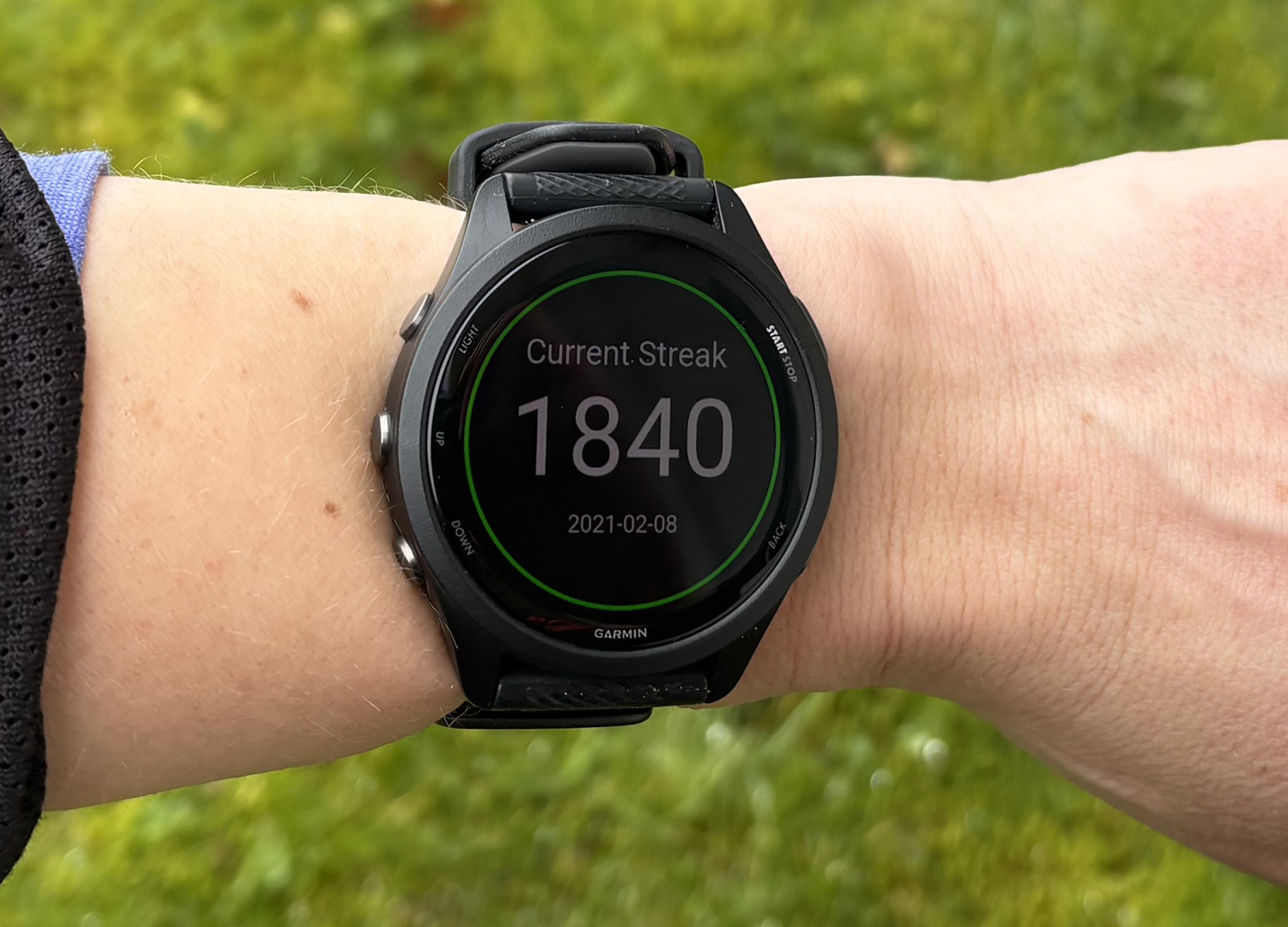
I run every day. No days off. For over 5 years.
On the rare occasion I talk about it (plenty of lessons learned in 5 years) I get one of two responses:
- Surprise and awe. Really? That’s crazy. I also admire it but can’t quite imagine it.
- Seriously? I need to tell you all the reasons this is a bad idea and why you shouldn’t be doing it. I am an expert and you are clearly ill-informed and don’t know what you are doing.
Neither answer is ideal. The first makes me uncomfortable. I’m not a role model for streaking. My choice isn’t necessarily the right choice for you. And the second group are just presumptuous and, frankly, insulting.
Why they might be right
I’m not saying the ‘experts’ are wrong. Far from it. In fact, as a run coach, I frequently suggest caution when talking to athletes about my streak. It’s not for everyone.
I have been injured. I know my approach is causing the injury. But most of the time I can tell you exactly how (and why) I got injured. I also know that I would heal quicker if I rested and stopped my streak. And, when athletes I coach see me running, I am quick to point out why it might not be the best strategy.
That said, in five years I’ve run through multiple injuries and illnesses, not all of them running-related. I’ve adapted. I’ve sought advice, discussed my options and arrived at a solution. Advice from professionals. Solutions based on knowledge and understanding.
Last year I likely had a stress fracture. This was the first time something had happened where I really struggled to run through. After consulting a physio, I had to accept that running 5K wasn’t just bad. It was potentially catastrophic.
But I could try a slow flat mile? It was worth a go. Provided I accepted two things: I’d miss my half marathons, and I’d stop if things didn’t improve in two weeks.
Why a mile? That’s what I needed to keep my official streak alive. It was a mindset shift. But I knew I had no option. Why? Because, despite conventional wisdom, I’m really not stupid.
Conventional wisdom
The conventional wisdom is right. Recovery is essential. Overtraining and injury often come down to inadequate rest. Experts advise against streaking for good reason. The science isn’t just compelling. It is sensible and right.
But there’s nuance. A slow mile after a hard workout is active recovery, not training. Most streakers aren’t running hard every day – they’re doing a minimum mile at conversational pace. That’s movement, not stress.
A mile can be run without raising your heart rate significantly. It’s barely more than a fast walk. That’s not the same as skipping rest after intense training.
My mindset
I have an all-or-nothing mindset. It is easy to talk my brain out of something. I have any number of reasons (excuses) ready to go. But it’s also fairly easy to talk my brain into something. You just need to know how to do it. And ignore the advice others are quick to give.
In 2018 I set myself the Run the Year challenge. Run 2018 miles in the year. I didn’t get close. In 2019 I tried again. Ran less. I started for a third time in 2020 and did better. But, by August I was only halfway. 1000 miles to go and less than half the year left. To cut a long story short, I had to learn to run slow. Figure out how to run at a lower intensity. This was an important mindset shift. I took Fridays as my rest day because I understood the need to rest with the mileage I was doing. But I saw people out running and I wished I was them (first clue).
I ran 2020 miles and took January off. I hated it and I wanted to run. But I needed something to focus me and keep me on track (second clue). So, I tried another streak. My first two had ended after 90 and 100 days due to injury. Now I had four months of high volume, low intensity running to draw on. Lots of lessons learned.
The biggest lesson? I’d been waking each day asking myself if I would run today. When I started asking ‘When will I run today?’ everything shifted.
The decision was made. The only question left was timing.
My choice
But, most people don’t stop to ask why. Why do you streak? What do you get from running every day? Those questions open an interesting and sensible dialogue. They start a conversation I love, and am happy, to have.
I run every day because I love it. It’s that simple. I love being outdoors. The feeling of running.
But I don’t run hard. I don’t run fast. And it’s been a long time since I set a personal best. That’s my choice.
I choose daily running. The achievement of clocking up another day on my streak. That’s what motivates me the most.
But there are trade-offs. I know I’m never going to reach my running potential or even know what that is. I’m OK with that. You can say differently, but you are putting your goals onto me. You are judging me based on what’s important to you.
Consistency matters to me
Consistency is something that eluded me for years. 15 years to be clear. I struggle with consistency and yet I strive for it in almost every part of my life. I also love tracking and any kind of streak. Because I know that’s how I get things done. How I achieve growth in my business. How I create structure in my day. It’s tried and tested and it works for me.
I thought I was a perfectionist. And, in some respects I probably am. But I chase consistency first. Perfect consistency.
What my streak teaches me
Streaking has quite literally changed my life. In understanding the pros and cons, reflecting on why I do it, and considering other options, I have come to learn about motivation, habits, accountability. I’ve learned more about myself than I have in anything else I’ve done. And it set me off on the path that led me to qualifying as a coach who specialises in habits, a Scottish Athletics run coach, and an NLP practitioner. It directly (but not in a straight line) took me from full time employment in marketing to self-employed as a habits coach. And I’m proud of that.
I never wanted to be a professional runner. It’s never been what drives me. Psychology, on the other hand, has always been fascinating to me. I never thought that running would take me to a place where psychology is central to what I do. But it has.
It’s not just running
My story is focused on running, but making your own decisions is not limited to running. When you do your research, you are clear on why you are doing something, you’ve considered the benefits and risks, you are perfectly placed to make the decision that is right for you.
Your why, the benefits and risks are unique to you. They are based on your experience, opinions and needs. Of course, people can give you advice if you want it. But the decision must be yours.
A key difference for me was finding a group of like-minded people in the Runner’s World Runstreak Facebook group. In that group, streaking is normal. Everyone has their own reason for wanting to do a streak and no-one cares why. So, you get support and everyone cheers you on just for being in the group and giving it a go. There are no naysayers. No one lectures you about the science, or the sense, of streaking. There are lots of these groups around on social media platforms, websites and local in-person groups.
When I went self-employed, I chose not to ask for advice. For years I’d heard talk and stories about ‘the right time’. Lots of opinions and advice. I’d heard it all. I didn’t need to hear it again. I realised I didn’t know anyone who had done what I was planning, so I suspected that the advice wouldn’t be positive. And yet, I knew it was the right choice for me. So, I went ahead. Then I found like-minded people through local business clubs and networking events. It’s not perfect. I have good days and bad days. But I’ve never regretted it. And finding my people has turned out to be the most fun and most rewarding part so far.
Make Your Mind Up Framework
It may sound easy for me to say. I’ve done it after all. But, doing it doesn’t mean the next time it will be easier. Every situation is different. Here’s the Make Your Mind Up Framework I follow now:
1. What’s the conventional wisdom?
Have you done your research? Do you know the risks? Are you clear on what the benefits to you will be?
2. What matters most to you?
What are your priorities? How does this decision impact your life?
3. What are you willing to trade?
Are you making an informed choice? Are your eyes open? What changes might you have to make to accommodate it?
4. Where are your people?
If you decide to make the change (for example) do you have the right people around you, or do you know where they are?
Your decision
You’re the only person who knows you. So, you are the only person that can decide. Take advice, if it helps. Do your research. Gather all the information you need and then decide for yourself.
This is The Habit Hacker approach: finding creative solutions and unconventional workarounds so you work smarter rather than following established ideas. Standard approaches often don’t fit your specific situation. Going your own way is often more effective.
