
My 2026 plan has already fallen by the wayside. It was inevitable.
A month into 2026 and I’ve already adjusted my plans. But I’m not worried. There’s plenty of the year left. Good news. That means that there’s also plenty of time for things to go right. And wrong.
Last year I had to abandon all my running goals because I got injured. Goals that didn’t happen because life got in the way? Sound familiar?
This year I had a plan and already it’s fallen by the wayside. I can’t even remember why. But I know I wasn’t committed to it. There was no event at the end. Nothing concrete to work towards. An easy-to-move deadline.
It struck me. It was the same at work. The same with my side hustle. And it’s turning out to be true for running my own business too.
But, the business lessons from running aren’t about discipline or motivation. They’re about systems, accountability, and being honest with yourself.
My brain knows when I’m lying
I’m envious of people who can set a goal and make it real. They pick a deadline and commit. Some announce it on social media and that’s enough accountability.
Not me.
My brain knows the difference between a real deadline and one I make up.
I planned to kick off the year with a 5K training programme so I could run a Parkrun PB in March. Sounds good, right? I thought so. Until March became April became some undefined date at some point.
But the real issue is that Parkrun happens every Saturday. If I don’t hit it one week, there’s always the next week. My brain knows this. It knows the deadline is flexible. So, it doesn’t commit.
Public announcements don’t work for me either. I don’t believe anyone is listening and if they are, they never call me on it. So, my brain knows it isn’t real. It doesn’t matter.
It’s not that different when I sign up, and pay, for an event. This is a fixed moment in time. But now I go all-in. Full training plan from day one. Intervals, hills, long runs. I commit to CrossFit three times a week even though I know two is more realistic.
By week 2, I’m injured. Every time.
This same pattern shows up in my work. And now in my business. I haven’t learned my lesson. I task myself with doing too much or give myself too short a window. I’ve convinced myself I work best under pressure, so I create pressure without thinking it through.
The result? Injury. Overwhelm. Or nothing happens.
What have I learned? Anything?
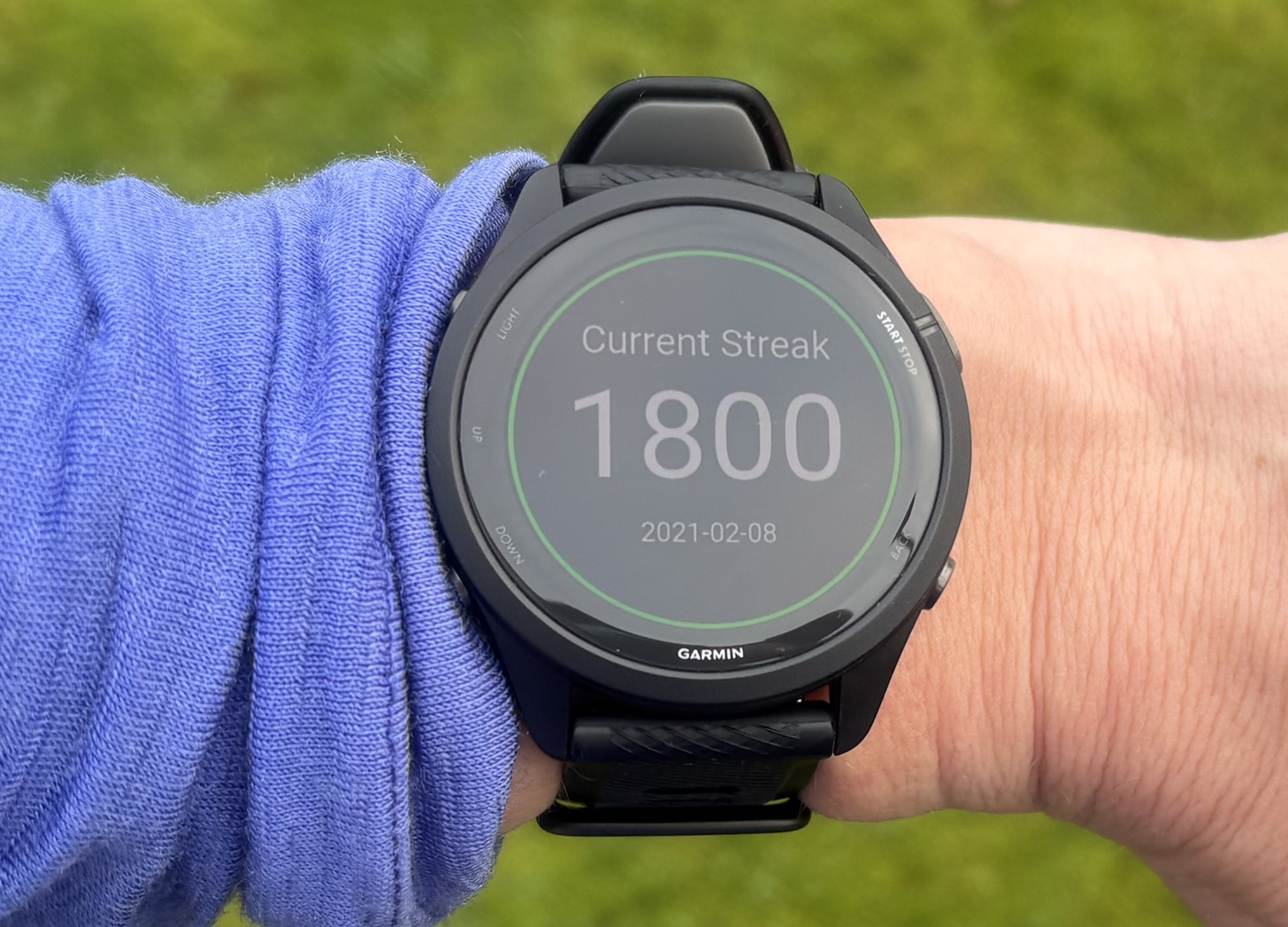
I have one thing that works consistently. It never lets me down. My run streak. 1800+ days and counting.
It works because I ask ‘when will I run today?’ not ‘will I run today?’ That one word removes the opportunity to debate, procrastinate, or bail out.
The streak isn’t about discipline or motivation. It’s about removing decisions.
I don’t have a training plan or progressive mileage targets. I simply run 5K every day. Same distance, same routine. My daily running routine removes all thinking.
This taught me that building consistency in running doesn’t need to be about pushing harder. It can be about making it impossible to skip.
I looked at what else works in my running. Events I’ve paid for have a real deadline; I rotate my shoes by taking them off, placing them under the other pair, then the top pair is for my next run; and I wear my kit for two runs, then wash it.
But there’s plenty that doesn’t work. My vague ‘get fitter’ or ‘run a PB’ goals, all-or-nothing training plans and public announcements with no accountability.
The pattern isn’t difficult to spot. Systems are better than intentions. Real deadlines work; flexible ones don’t. Daily actions beat big ambitious plans.
And, in my experience, if it’s true for running, the same lessons are true for business.
How do I apply this to my business?
My run streak works because it’s daily. Not ‘run when motivated’ or ‘run 3 times a week’. Every single day. That consistency removes all the mental gymnastics.
In my business, I will apply the same principle to writing. Every day I write for 5 minutes. It might be a post, an article, or just thoughts and ideas for content. But 5 minutes, every day. The compound effect of daily action is what builds momentum. The goal will be to increase by 5 minutes per month, but I’ll start small and get it working before I build on it.
Task stacking already works well in my business. There are repetitive tasks and I work well with lists. Once I have a list, I plan the order. It’s straightforward when you have structure around you.
I need more strength training for running, so I’m taking the same principle. Three strength moves after my Sunday run each week. Not ‘fit it in when I can’ but Sunday run = strength. Triggered. Automatic. I will know what the 3 moves are by the first Sunday in February (deadline).
In 2020, I ran 2020 miles. By late August, I still had over a thousand miles to go. I had to track daily mileage and focus on what I needed to do each day to hit the target.
I’m doing the same now for my business. One metric at a time, tracked visually on my office wall. For February it will be my daily writing goal. Tracking gives me clarity on whether I’m making progress or lying to myself. But only one metric at a time. If you track too much it becomes procrastination dressed up as productivity.
What’s next?
I’m committing to some changes by the end of February. 5 minutes writing every day (tracked visually) and 3 strength moves being completed after every Sunday run.
I’ll review my progress at the end of February and build on my goals for March.
Not all-or-nothing. Not flexible deadlines. Progressive systems with accountability.
Whether it’s running goals or business goals, the approach is the same. Daily action, real deadlines, systems that don’t let me lie to myself.
Need help building your system? Book a call and let’s talk.
